
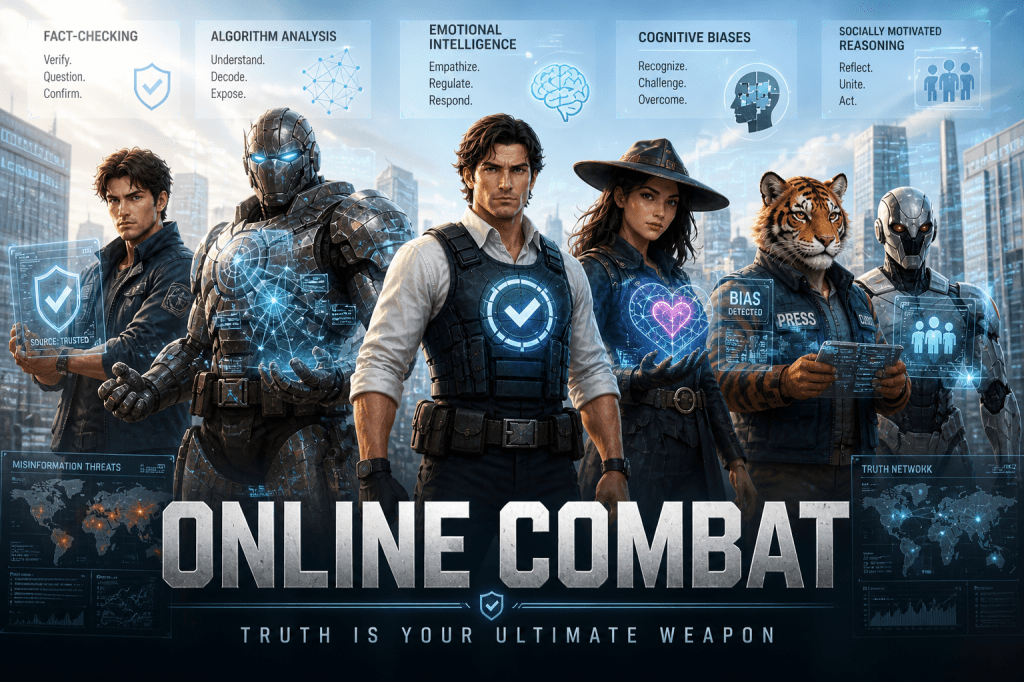
The consortium of the Erasmus+ project Combating Online Misinformation to Prevent Radicalisation of Vulnerable Adults (Online Combat) is proud to announce the official launch of the Building Skills of Vulnerable Adults to Combat Online Disinformation non-formal educational programme for adult educators. The programme provides educators with practical tools to strengthen media literacy, critical thinking, and democratic resilience among vulnerable adults.
As misinformation and propaganda continue to spread rapidly through social media and online communities, adult educators increasingly face the challenge of helping learners navigate complex and often manipulative information environments. The new programme responds to this need by offering evidence-based methods and ready-to-use educational activities.
The programme is designed for educators working with vulnerable adults, including people with limited digital skills, migrants and refugees, and socially isolated individuals who may be particularly susceptible to manipulation, exclusion, or radicalisation. The programme helps to empower learners to critically evaluate online information, make informed decisions, and participate confidently in democratic society.
Our programme recognises that misinformation is often accepted because of emotions, personal experiences, social identity, and trust. The educational approach emphasises empathy, dialogue, and critical reflection. Educators are encouraged to act as facilitators who help learners question information, compare perspectives, and build resilience against manipulation.
The educational programme helps adult educators to identify online misinformation and manipulation techniques; strengthen critical thinking and digital literacy; use engaging educational approaches, including AI-supported learning tools; and facilitate respectful discussions on controversial topics while promoting democratic values.
The manual is organised into five thematic modules covering the main psychological and social mechanisms behind misinformation:
- Disinformation Types and Techniques – understanding how misinformation is created and spread.
- Cognitive Factors – recognising cognitive biases and psychological mechanisms influencing beliefs.
- Emotional Factors – exploring the role of emotions in misinformation acceptance.
- Social Factors – examining identity, trust, and group dynamics.
- Combating Disinformation – applying practical fact-checking, prebunking, and resilience-building strategies.
Each module combines concise theoretical explanations with practical workshop activities, printable worksheets, discussion exercises, and adaptable learning materials. Rather than functioning as a traditional textbook, the manual serves as a flexible toolkit that educators can tailor to different groups, learning contexts, and levels of digital literacy.
You can read and download the Program in English and Dutch and use it for non-commercial educational purposes under the Creative Commons Attribution–NonCommercial 4.0 International (CC BY-NC 4.0) licence.


Leave a Reply